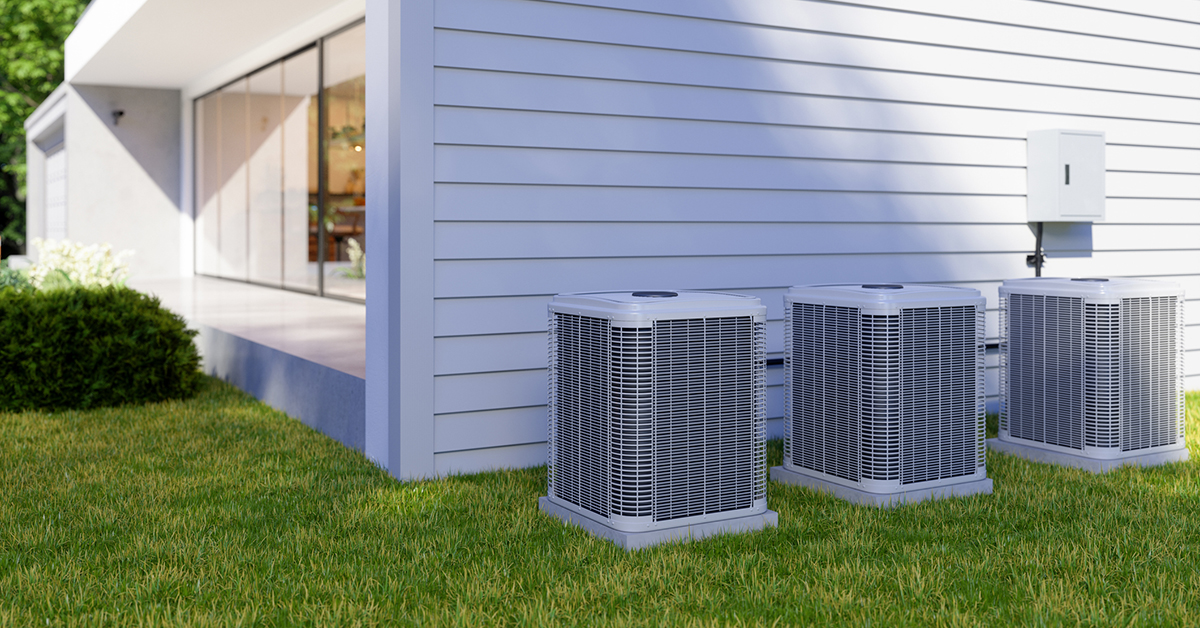
A central AC that runs but does not cool usually has an airflow, coil, outdoor-unit, electrical, or sealed-system problem. If your central AC is not working at all, start with the Wall Thermostat and power instead. This guide helps you separate a central air conditioner not cooling problem from a system that has stopped working completely, then work through the most likely causes in a practical order.
If your central air is on but not cooling the house, do not start by replacing the Compressor or Main Control Board. Check thermostat settings, the Air Filter, registers, indoor airflow, outdoor coil condition, and whether the outdoor condensing unit is actually running. Those observations narrow the diagnosis before you buy a part.
Start Here When Your Central AC Is Not Cooling
Start with the symptom and your full model number. You can browse Central Air Conditioner Parts by model, and use the Central Air Conditioner model number guide if you are not sure where to find the tag. For the full symptom path, Repair Clinic also provides dedicated central air conditioner not cooling troubleshooting.
Safety: Disconnect power at the outlet or the circuit breaker before opening the appliance or testing electrical components. A central air conditioner uses high voltage at the outdoor condensing unit and indoor air handler. If diagnosis requires live-voltage testing and you are not trained to perform it safely, contact a qualified HVAC technician.
Key takeaways
- If the central AC is not cooling, confirm the Wall Thermostat is calling for cooling and the system has power.
- Check the Air Filter, open registers, Blower Motor operation, and coil condition before replacing electrical parts.
- If the indoor fan runs but the house is not cooling, determine whether the outdoor condensing unit and Compressor are running.
- A failed Dual Run Capacitor, Contactor, Condenser Fan Motor, control, or Compressor can stop the outdoor unit from removing heat.
- Refrigerant charging, leak diagnosis, and Compressor replacement require a qualified HVAC technician.
On this page
- Central AC Not Working vs. Not Cooling
- Check the Wall Thermostat and Power
- Check the Air Filter and Airflow
- Check the Evaporator and Condenser Coils
- Check the Outdoor Condensing Unit
- AC Running but Not Cooling
- Common Causes and Replacement Parts
- When to Call an HVAC Technician
- Frequently Asked Questions
Central AC Not Working vs. Central AC Not Cooling
"Central AC not working" and "central AC not cooling" can describe different failures. If the system is completely silent, check the thermostat call, breaker, outdoor disconnect, and control power first. If the central air stopped working suddenly after operating normally, note whether the indoor Blower Motor, outdoor Condenser Fan Motor, or both stopped. A repeated breaker trip is a fault signal, not a reset routine. Use the central air conditioner circuit breaker troubleshooting path if the breaker will not stay set.
If the system is running but the central air is not cooling, focus on airflow and heat transfer. Weak airflow, dirty coils, an iced Evaporator Coil, an outdoor fan problem, a Compressor that is not running, or a sealed-system issue can all leave the house warm even though part of the system appears to be operating.
1. Check the Wall Thermostat and Power
Start by checking the Wall Thermostat. Set the system to cooling and set the temperature below the current room temperature. If the thermostat uses replaceable batteries, make sure they are not depleted. A Wall Thermostat that does not send the cooling call can make the central air conditioner look completely dead even when the equipment itself is capable of running.
If the display, settings, or cooling call appear wrong, follow the Wall Thermostat troubleshooting guide. If testing confirms the thermostat is defective, use your model and system information to compare Central Air Conditioner Thermostat Parts.
Also confirm the central AC breaker and any accessible outdoor disconnect are in the correct operating position. Do not repeatedly reset a breaker that trips again. A shorted motor, Compressor, wiring fault, or other electrical problem needs diagnosis before the unit is energized again.
2. Check the Air Filter, Registers, and Indoor Airflow
A restricted Air Filter is one of the first things to check when a central air unit is not cooling the house. Restricted airflow reduces the amount of warm indoor air that can move across the Evaporator Coil. It can also contribute to coil icing, weak airflow at the registers, long run times, and poor cooling.
Inspect the Air Filter and replace it if it is visibly dirty or overdue based on the system's maintenance schedule. Use the full model or filter dimensions when choosing Central Air Conditioner Filter Parts. Make sure supply registers and return grilles are open and not blocked by furniture, rugs, curtains, or heavy dust buildup.
If the filter and registers are clear but airflow is still weak, listen for normal Blower Motor operation at the furnace or air handler. A failed or slow Blower Motor can reduce airflow enough that the central air conditioning system is not cooling properly. Use the central air conditioner not blowing enough troubleshooting path to narrow the cause. If diagnosis points to the motor, compare model-specific Blower Motor Parts.
3. Check the Evaporator Coil and Condenser Coil
The Evaporator Coil absorbs heat from indoor air, while the outdoor Condenser Coil releases that heat outside. Dirt or restricted airflow at either coil can make a central air conditioner run without cooling the house effectively.
Look for frost or ice around the indoor coil area or refrigerant tubing. If the Evaporator Coil is icing up, shut the cooling system off and allow the ice to thaw before continuing diagnosis. Then correct obvious airflow problems such as a dirty Air Filter or blocked registers. Use the central air conditioner coil icing troubleshooting path if the coil freezes again.
At the outdoor unit, disconnect power before removing debris around the Condenser Coil. Clear leaves, grass clippings, lint, and other obstructions that can restrict airflow. Follow the equipment instructions for coil cleaning rather than bending the fins or forcing debris deeper into the coil.
4. Check Whether the Outdoor Condensing Unit Is Running
If the indoor blower is moving air but the air is not cold, check the outdoor unit from a safe distance. The Condenser Fan Motor and Compressor normally operate when the system is actively cooling. If the outdoor unit is silent, hums without starting, or the fan is not turning, the problem has moved beyond a simple indoor airflow check.
Common outdoor-unit causes include a failed Dual Run Capacitor, a defective Contactor, a bad Condenser Fan Motor, a control problem, loss of power, or a Compressor that cannot start. The central air conditioner condensing unit not running guide provides the symptom-specific repair path.
A bulged or leaking capacitor is a strong visual sign of failure, but a capacitor can also fail without obvious damage. Electrical testing should be performed only with power disconnected and by someone who understands capacitor discharge and meter use. If the Condenser Fan Motor is binding, overheats, or fails electrical testing, compare the correct Condenser Fan Motor Parts by model number.
5. Central AC Running but Not Cooling the House
If your central AC is running but not cooling, identify what is actually running. An indoor fan working does not prove the Compressor is operating. An outdoor fan working does not prove the sealed system is moving refrigerant correctly. This is why "air conditioner working but not cooling" needs a component-by-component check rather than a single guess.
- Indoor Blower Motor runs, outdoor unit does not: Recheck the thermostat call, outdoor power, Contactor, Dual Run Capacitor, and control circuit.
- Outdoor fan runs, air is still warm: Check airflow and coil condition, then determine whether the Compressor is running.
- Both indoor and outdoor fans run, cooling is weak: Check for a dirty Air Filter, dirty coils, an iced Evaporator Coil, duct airflow problems, or a sealed-system issue.
- System cools briefly and then stops: Look for icing, airflow restriction, overheating, electrical protection opening, or another condition that interrupts the cooling cycle.
If the Compressor will not run, do not assume it needs replacement until more common electrical causes have been checked. Follow the central air conditioner Compressor troubleshooting path before moving to sealed-system work.
Common Central AC Not Cooling Causes and Replacement Parts
Use symptoms and testing to decide what to replace. The table below summarizes the repair direction for common central air not cooling complaints.
| What you observe | Check first | Possible repair direction |
|---|---|---|
| Central AC not working at all | Wall Thermostat, breaker, disconnect, control power | Thermostat or electrical diagnosis before replacing major parts |
| Central air not cooling, airflow is weak | Air Filter, registers, Blower Motor, Evaporator Coil | Correct airflow restriction or diagnose the blower system |
| Central AC unit not cooling, outdoor unit is silent | Power, Contactor, Dual Run Capacitor, control circuit | Replace only the component that fails inspection or testing |
| Outdoor fan does not run | Fan Blade, Dual Run Capacitor, Condenser Fan Motor | Repair the fan circuit before allowing the Compressor to run for an extended period |
| Central air is on but not cooling enough | Airflow, coil cleanliness, icing, Compressor operation | Correct airflow and coil issues before sealed-system diagnosis |
| Central air stopped working and breaker trips | Motor, Compressor, wiring, electrical short | Stop resetting the breaker and have the fault diagnosed |
| Fans run but the air is not getting cold | Compressor operation and sealed-system performance | Escalate refrigerant and Compressor diagnosis to a qualified HVAC technician |
When to Call an HVAC Technician
Many central air not cooling problems can be narrowed with safe visual checks, filter replacement, airflow inspection, coil cleaning, and observation of which components are running. Stop the DIY diagnosis when the next step involves live high-voltage testing, repeated breaker trips, damaged wiring, or sealed-system work.
Refrigerant handling and sealed-system repairs require EPA 608 certification and specialized recovery equipment. Contact a licensed HVAC technician for refrigerant charging, leak diagnosis, and compressor replacement.
A Compressor is one of the most expensive components in the system, so it should not be the first guess. Confirm the thermostat call, airflow, power, Contactor, Dual Run Capacitor, fan operation, and control circuit before a technician condemns the Compressor or sealed system.
Frequently Asked Questions
Why is my central AC not cooling?
Start with the Wall Thermostat, Air Filter, registers, indoor airflow, and outdoor coil condition. If those checks are normal, determine whether the outdoor Condenser Fan Motor and Compressor are running. A failed Dual Run Capacitor, Contactor, motor, control, or sealed-system problem can also cause a central AC not cooling complaint.
Why is my central air not working or why did it stop working?
If the central air stopped working completely, check the thermostat call, breaker, outdoor disconnect, and whether either the indoor or outdoor fan runs. A system that is totally silent follows a different diagnostic path than one that runs but does not cool. Do not repeatedly reset a breaker that trips again.
Why is my central AC running but not cooling?
If the unit is running but not cooling, confirm which components are operating. The indoor blower can run even when the outdoor unit or Compressor is not. If both fans run, check the Air Filter, airflow, coils, icing, and then sealed-system performance.
Can a dirty Air Filter make a central air conditioner not cool?
Yes. A dirty Air Filter restricts airflow across the Evaporator Coil. That can reduce cooling, weaken airflow at the registers, increase run time, and contribute to coil icing. Replace a dirty filter before moving to electrical or sealed-system diagnosis.
Why is my central air unit not cooling the house enough?
Weak whole-house cooling can come from restricted airflow, dirty coils, an iced Evaporator Coil, poor Blower Motor performance, an outdoor unit problem, or a sealed-system issue. Check the simplest airflow and maintenance items before replacing parts.
Why is the central air fan working but not cooling?
First identify which fan is running. If only the indoor Blower Motor runs, the outdoor unit may not be starting. If the outdoor Condenser Fan Motor runs, the Compressor still may not be operating. Check airflow, coils, capacitor and contactor operation before sealed-system diagnosis.
Can a bad Dual Run Capacitor cause central AC not cooling?
Yes. On systems that use a Dual Run Capacitor, a failed capacitor can prevent the Compressor, Condenser Fan Motor, or both from starting correctly. Test the capacitor safely with power disconnected and replace it only with the correct rating for the model.
When should I stop troubleshooting central AC and call a professional?
Call a qualified HVAC technician when diagnosis requires live-voltage testing you are not trained to perform, the breaker repeatedly trips, wiring is damaged, or the problem involves refrigerant, leaks, the sealed system, or Compressor replacement.
Central Air Conditioner Repair Help and Parts
For broader symptom-by-symptom diagnosis, use Central Air Conditioner Repair Help or review the Central Air Conditioner Repair FAQs. If testing points to an electrical start or motor problem, compare model-specific Central Air Conditioner Capacitor Parts and Central Air Conditioner Motor Parts. Use the full model number before ordering so the replacement part matches your unit.