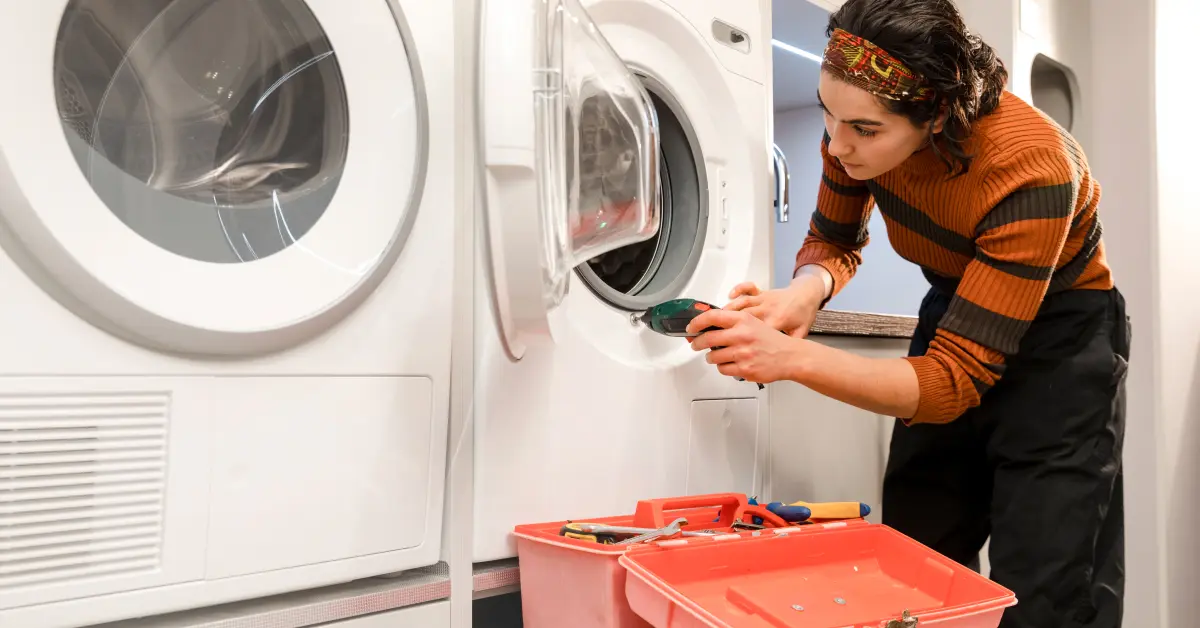
If your washing machine drain is clogged or the washer is leaving water in the tub, start by finding where the blockage is. The restriction may be in the pump filter or Coin Trap, the Drain Pump, the Drain Hose, or the household standpipe or waste pipe. Unplug the washer, contain the standing water, clear the easiest restriction first, then run a drain or spin test before taking more of the machine apart. If the drain path is clear but the washer still will not drain, the problem may be electrical or mechanical rather than a clog.
How Can You Unclog a Washing Machine Drain?
A washing machine drain is the full path that carries water from the tub through the pump and hose into the home's drain system. To unclog it, work from the most accessible points inward: inspect the Drain Hose for kinks, empty the pump filter or Coin Trap if your model has one, check the Drain Pump for debris, then separate a washer blockage from a clogged household standpipe. If an obstruction has damaged the pump, use the full model number to match the correct Washing Machine Drain Pump Parts rather than replacing a pump based on symptoms alone.
Key Takeaways
- A washer drain clog can be in the Coin Trap, Drain Pump, Drain Hose, standpipe, or household waste pipe.
- Standing water in the tub plus a humming pump points more toward the filter, pump, or internal hose than the household drain.
- If water exits the washer hose but backs up from the standpipe, the blockage is in the home's plumbing, not the washer.
- A kinked or poorly routed Drain Hose can act like a clog and can also cause siphoning or slow drainage.
- If the pump and hose are clear but the washer still will not drain, move to the Washer Won't Drain diagnostic path instead of continuing to clear pipes.
Check the model before opening panels or ordering parts: use Washing Machine Model Number Help to find the complete model number. Pump filter access, hose routing, pump design, and replacement parts vary between top load and front load washers.
Washing Machine Drain Clog Guide
- Find where the washer drain is clogged
- Tools and safety
- How to unclog a washer drain step by step
- Clear the Drain Pump filter or Coin Trap
- Unclog a washing machine Drain Hose
- Clean the Drain Hose without fully removing it
- Clear a blocked standpipe or waste pipe
- Check Drain Hose height and placement
- What to check if the washer still will not drain
- Prevent future drain blockages
- Frequently asked questions
How to Tell Where the Washing Machine Drain Is Clogged
Do not assume every washer that will not drain has the same blockage. Listen to the drain cycle, look at where water is backing up, and check the external hose before opening the appliance. This helps separate a clogged washer drain from a clogged laundry room drain.
| What you notice | Likely restriction | What to check next |
|---|---|---|
| Water stays in the tub and the pump hums or strains | Pump filter, Coin Trap, Drain Pump, or internal pump hose | Drain the standing water, clean the accessible filter, and inspect the pump inlet and impeller area |
| Washer drains slowly and the Drain Hose is kinked or crushed | Drain Hose | Straighten the hose and inspect it for lint, fabric, or a small object |
| Water flows from the washer hose but overflows the standpipe | Household standpipe, P-trap, or waste pipe | Stop running the washer and clear the household drain separately |
| Front load washer has a full tub and a dirty pump filter | Coin Trap or pump filter | Use the emergency drain tube if equipped, then clean the filter and housing |
| Pump and hose are clear but the pump never runs | Not necessarily a clog | Continue with washer not draining diagnosis for the Control Board, Timer, Door Lock, Lid Switch Assembly, wiring, or Drain Pump |
Tools, Water Control, and Electrical Safety
For a typical accessible filter or Drain Hose clog, have towels, a shallow pan, a bucket, flashlight, pliers, screwdriver, and a flexible long handled cleaning brush ready. Accessing a pump behind a cabinet panel can take longer and may require additional model specific tools. Difficulty ranges from basic maintenance for an external hose or front access filter to intermediate repair when the pump or internal hoses must be removed.
Electrical safety: Disconnect power at the outlet or the circuit breaker before opening the appliance or testing electrical components.
Turn off the washer's hot and cold water supply valves if you need to move the machine or disconnect water connections. Expect trapped water in the tub, pump, and hoses even after the washer is unplugged. Use a shallow pan and towels and open filters or hoses slowly.
Do not pour caustic household drain cleaner into the washer, Drain Pump, or Drain Hose. It can damage appliance materials and can create a chemical exposure when the hose or pump is opened later. If the household standpipe is clogged, clear that plumbing separately with an appropriate mechanical method or a plumber.
How to Unclog a Washer Drain Step by Step
- Stop the cycle and disconnect power. Unplug the washer or switch off the correct circuit breaker before opening any access panel or touching the pump, filter, or internal hoses.
- Contain the standing water. If a front load washer has an emergency drain tube near the pump filter, drain it into a shallow pan in small batches. Otherwise, lower an accessible Drain Hose into a bucket only if the model and installation allow gravity draining. Have towels ready.
- Check the external Drain Hose for a kink. Pull the washer forward enough to inspect the hose without stretching electrical or water connections. Straighten crushed, twisted, or sharply bent sections.
- Clean the pump filter or Coin Trap if the washer has one. Remove coins, lint, hair, fabric, buttons, paperclips, and other debris. Clean the filter housing before reinstalling the filter securely.
- Inspect the Drain Pump inlet and impeller area. With power disconnected and water contained, remove visible debris that is preventing the impeller from moving. Do not force or pry the impeller.
- Check the Drain Hose for an internal blockage. Disconnect it only as the model's service procedure allows. Flush a removed hose with warm water and use a flexible brush to loosen lint or detergent buildup. Replace a cracked, collapsed, or damaged hose.
- Separate washer drainage from household plumbing. If the washer can discharge water through its hose but the standpipe backs up, clear the standpipe or P-trap rather than continuing to disassemble the washer.
- Reassemble and verify drainage. Reconnect every hose and clamp, restore the correct hose routing, then run a drain or spin cycle. Confirm the tub empties, water flows steadily into the standpipe, and there are no leaks at the filter, pump, or hose connections.
How to Unclog the Washing Machine Drain Pump Filter or Coin Trap
Many front load washers use a pump filter or Washing Machine Coin Trap to catch debris before it reaches the Drain Pump. Coins, keys, paperclips, tissues, and fabric debris are common sources of washer drain blockages. Some models place the filter behind a small lower front access door. Others integrate it into the pump or a larger pump hose, which may require panel removal.
- Disconnect power and place a shallow pan and towels below the filter area.
- If the washer has a small emergency drain tube, uncap it and drain the water into the pan before removing the filter.
- Turn the filter cap slowly. More water may escape as the seal opens.
- Remove lint, coins, hair, fabric, and other debris from the filter and housing.
- Inspect the pump opening for an object blocking the impeller. Remove only debris you can reach safely without forcing the impeller.
- Reinstall the filter fully so its seal seats correctly, then test the drain cycle.
If the filter and pump ports are clear but the Drain Pump remains unusually noisy during the drain cycle or cannot move water, the pump may be damaged rather than clogged. Use model specific diagnosis before replacing it.
How to Unclog a Washing Machine Drain Hose
A Washing Machine Drain Hose can clog with lint, hair, detergent residue, fabric, or a small item. It can also become kinked behind the washer after the appliance moves during a cycle. A clogged or kinked Drain Hose can leave water in the tub even when the Drain Pump is working.
- Disconnect power and pull the washer forward carefully.
- Inspect the full visible hose for kinks, crushing, sharp bends, or damage.
- Remove the hose from the standpipe or laundry tub and place the end in a bucket.
- If the service procedure allows hose removal from the washer, release the clamp and remove the hose after containing trapped water.
- Flush the removed hose with warm water. Use a flexible long handled brush for soft lint or detergent buildup.
- Replace the Drain Hose if it is cracked, internally collapsed, permanently kinked, or cannot be cleared without damaging it.
- Reconnect the hose with the correct clamps and routing, then run a drain test and check for leaks.
How to Clean a Washing Machine Drain Hose Without Removing It From the Washer
If the Drain Hose is still attached to the washer and you want to check it before removing cabinet panels, start at the discharge end. Pull the hose out of the standpipe or laundry tub, inspect the outlet for lint or debris, straighten any kink, and lower the hose into a bucket to see whether trapped water can flow out. A flexible long handled brush can clear debris near the hose outlet without forcing a rigid tool deep toward the pump.
This method is useful for an accessible clog near the hose end, but it cannot confirm that the full hose or pump connection is clear. If water will not pass through the hose, or the blockage is deep inside it, disconnecting the hose according to the model's service procedure is safer than forcing a stiff wire through a hose that could be punctured or pushed off an internal fitting.
How to Unblock a Washing Machine Drain Pipe, Standpipe, or Waste Pipe
The washing machine Drain Hose usually empties into a vertical standpipe or laundry tub. If the washer pumps water out normally but the standpipe overflows, the clogged drain is part of the home's plumbing. This is different from a blocked Drain Pump or hose inside the washer.
Remove the washer hose from the standpipe and inspect the opening with a flashlight. A plumber's snake or drain auger can be used on the household standpipe and P-trap to break up lint and residue. If nearby drains are also slow, water backs up from more than one fixture, or the standpipe continues overflowing after a local clearing attempt, the blockage may be deeper in the household drain system and is a better job for a plumber.
Can a Washing Machine Drain Hose Be Too Long or Installed Incorrectly?
Yes. A Drain Hose that is too long for the installation, sharply looped, crushed, routed too high, positioned too low, or pushed too far into the standpipe can contribute to slow drainage, kinking, or siphoning. The exact hose height, maximum length, and standpipe insertion depth vary by washer model and installation design.
Use the installation instructions for the full model number before changing Drain Hose height or length, because the required standpipe position varies by washer design. The goal is an unobstructed hose path with the manufacturer's required air gap and standpipe position, not simply the shortest possible hose.
If the Drain Is Clear, Why Is the Washing Machine Still Not Draining?
A washer that will not drain does not always have a clog. Repair Clinic's Washer Won't Drain repair help lists the Drain Pump as the top solution, followed by electrical and control causes such as the Control Board and Timer, then a clogged or kinked Drain Hose and door or lid lock problems. Use that diagnostic path when the filter, pump ports, hose, and household drain are clear.
| Cause to check | What it can do | Diagnostic direction |
|---|---|---|
| Drain Pump | Can be obstructed, damaged, or noisy without moving water | Clear debris first. If the pump is clear but still fails, test or replace it for the model |
| Control Board | May fail to send power to the Drain Pump | Check more common drain restrictions and pump condition before condemning the board |
| Timer | On some models, may fail to send power during the drain portion of the cycle | Use the wiring diagram and model specific test procedure |
| Drain Hose | Can be clogged, kinked, or crushed | Inspect and clear the hose before electrical diagnosis |
| Door Lock or Lid Switch Assembly | An obstruction or failure can prevent the washer from advancing or draining normally | Remove visible debris and use the model specific repair path |
Testing whether voltage reaches a Drain Pump can require the washer to be energized. If you are not trained to perform live voltage testing, stop after the de-energized inspections and have a qualified technician perform that test.
How to Prevent a Clogged Washing Machine Drain
- Empty pockets before every load so coins, paperclips, tissues, keys, and other objects do not reach the pump system.
- Clean the pump filter or Coin Trap at the interval recommended for your washer model.
- Use the detergent type and amount specified by the washer manufacturer. Excess detergent residue can contribute to buildup in hoses and filters.
- Inspect the Drain Hose after moving the washer and make sure it is not kinked, crushed, or forced against the wall.
- Check the standpipe if water begins backing up during the drain cycle. A household plumbing clog should be corrected before it overflows the laundry area.
- Do not ignore grinding, rattling, or repeated drain errors. A small obstruction can damage the pump impeller if the washer continues trying to drain.
Washing Machine Drain Clog FAQs
How can you unclog a washing machine drain?
Unplug the washer, contain any standing water, check the Drain Hose for kinks, clean the accessible pump filter or Coin Trap, inspect the Drain Pump for debris, and then check the household standpipe. Reassemble the drain system and run a drain or spin cycle to verify steady flow and no leaks.
How do I know if my washing machine Drain Hose is clogged?
A clogged Drain Hose can cause slow draining or water left in the tub even when you hear the pump running. Inspect the hose for kinks first. If it is straight, disconnect the discharge end and check whether water can flow through the hose. A deep blockage may require removing and flushing the hose.
How do I unclog a washing machine Drain Pump?
Disconnect power and drain the standing water before opening the pump filter or pump area. Remove debris from the Coin Trap, filter, pump inlet, and accessible impeller area. If the pump is clear but remains noisy or cannot move water, it may be damaged rather than clogged.
Can I clean a washing machine Drain Hose without removing it?
You can inspect and clean the discharge end without removing the entire hose. Pull it out of the standpipe, straighten any kink, remove visible debris, and use a flexible brush near the outlet. If the clog is deep inside the hose, remove the hose according to the model's service procedure rather than forcing a rigid tool through it.
Can I use drain cleaner to unclog a washing machine?
Do not pour caustic household drain cleaner into the washer, Drain Pump, or Drain Hose. It can damage appliance materials and create a chemical exposure when the drain system is opened. If the separate household standpipe is clogged, clear that plumbing independently with an appropriate method or plumber.
Why is my laundry room drain backing up when the washer drains?
If the washer pumps water out but the standpipe, floor drain, or nearby laundry sink backs up, the problem is likely in the household drain line rather than inside the washer. Stop running loads until the standpipe or downstream plumbing is cleared.
Can a washing machine Drain Hose be too long?
Yes. Excess hose length or poor routing can create loops, kinks, or height problems that slow drainage or contribute to siphoning. Follow the installation instructions for your exact washer model because allowed hose length, height, and standpipe placement vary.
Why won't my washer drain after I cleared the hose and pump filter?
If the Drain Hose, Coin Trap, pump ports, and household drain are clear, the washer may have a failed Drain Pump or an electrical problem involving the Control Board, Timer, Door Lock, Lid Switch Assembly, or wiring. Move to the full washer not draining diagnostic path rather than continuing to snake the drain.
Washing Machine Drain Repair Help and Replacement Parts
For broader diagnosis, use Washing Machine Repair Help or review the Washing Machine Repair FAQs. If testing confirms a damaged drain component, browse model specific Washing Machine Parts and enter the complete model number before ordering. Replace a part only after the clog location and diagnostic path point to that component.