


 Price Match Guarantee
Leaf Blower Parts
- Adhesive
- Alternator, Battery & Charger
- Auger
- Axle, Roller, Shaft, Wheel
- Bag
- Bearing
- Belt
- Blade
- Blower Wheel & Fan Blade
- Bracket & Flange
- Cap, Lid & Cover
- Carburetor
- Chassis
- Circuit Board & Timer
- Compressor & Sealed System
- Control Cable
- Deflector & Chute
- Dipstick
- Door
- Duct & Venting
- Engine
- Fastener
- Filter
- Gasket & Seal
- Grille & Kickplate
- Handle
- Hose, Tube & Fitting
- Ignition Controls
- Insulation
- Knob, Dial & Button
- Latch
- Lubricant
- Manuals, Care Guides & Literature
- Miscellaneous
- Motor
- Muffler
- Oil Plug
- Panel
- Pedal
- Power Cord
- Power Tools
- Pulley
- Pump
- Safety Equipment
- Shear Pin
- Shelf & Shelf Support
- Skid & Shoe
- Spark Plug
- Spindle
- Spring
- Starter
- Steering
- Suspension & Shock Absorption
- Switch
- Tank & Container
- Tire & Rim
- Tool
- Transmission, Brake & Clutch
- Trim
- Tune-Up Maintenance Kit
- Valve & Float
- Wire, Receptacle & Wire Connector
Find the right part faster
Multiple models matched. Select your model to confirm fit.




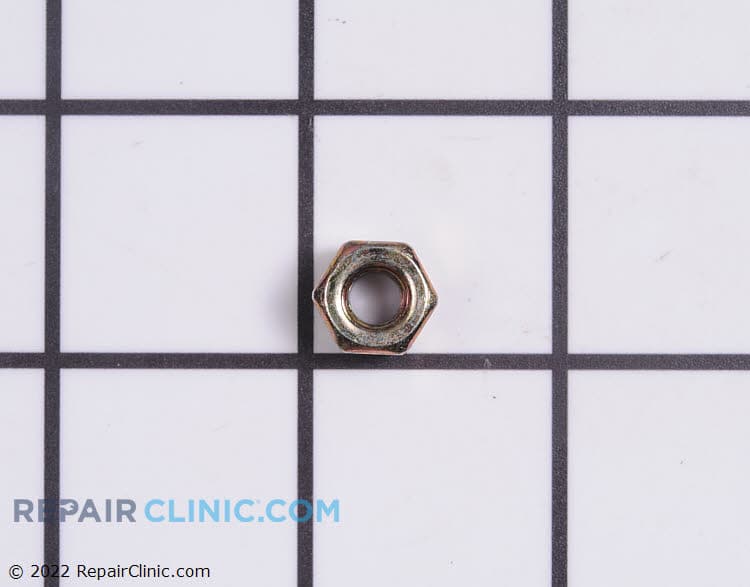
Lock nut with nylon insert.

Air filter. If the air filter is clogged or dirty, the engine may not start or may run rough.
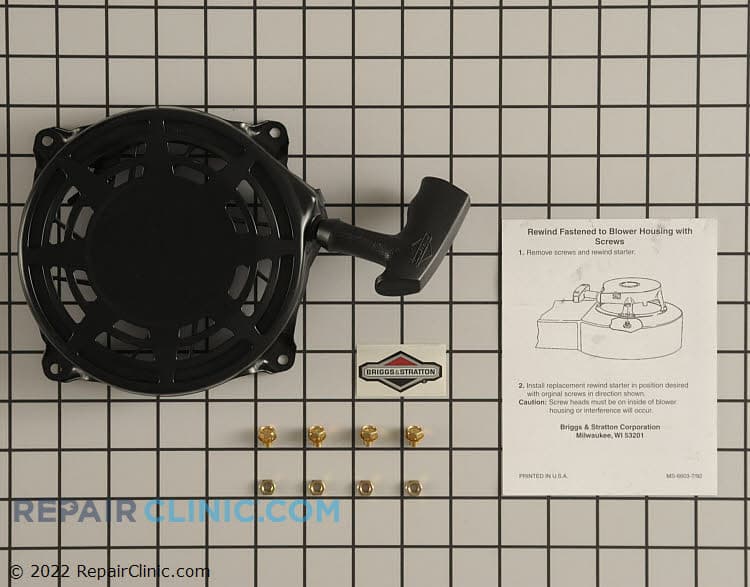
Briggs & Stratton recoil starter kit. The recoil starter engages the drive cup on the flywheel to start the engine. If the recoil starter is defective, the engine may not start.
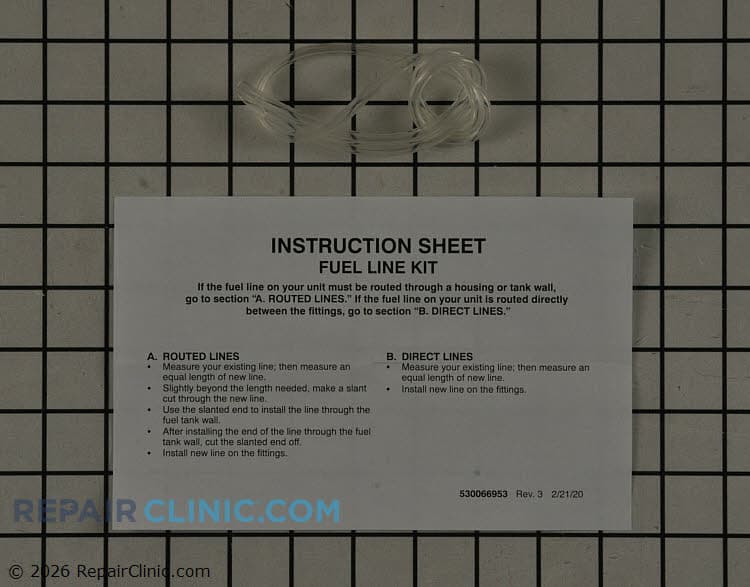
Fuel line (Large). The fuel line allows fuel to travel from the fuel tank to the carburetor and from the primer bulb to the fuel system.
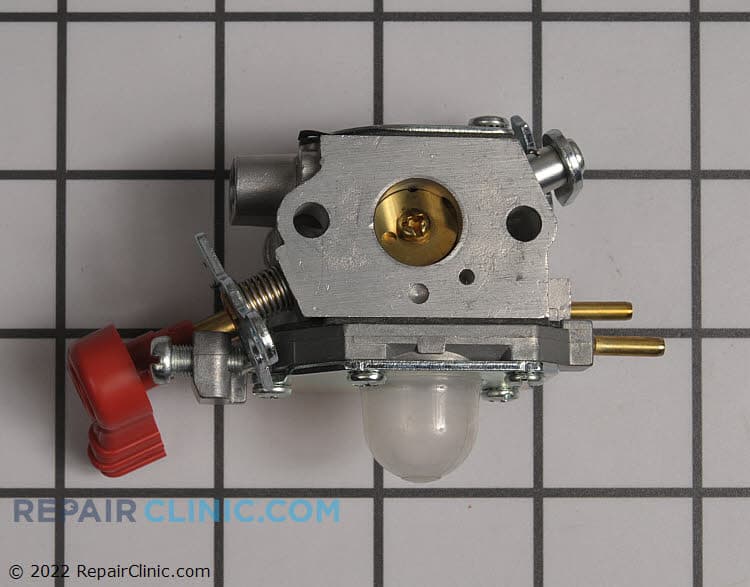
Carburetor for 2-cycle engine. If the carburetor is clogged, the engine won't get enough fuel. As a result, the engine may not start or may run rough.
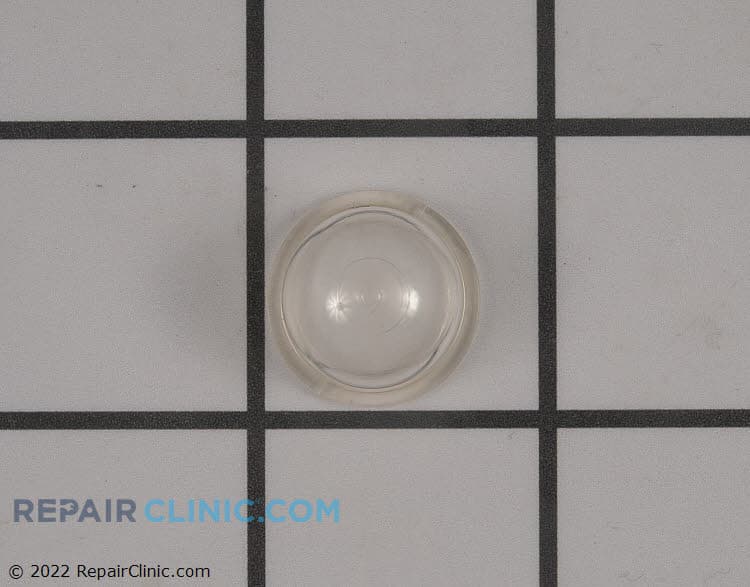
Walbro primer bulb. The primer bulb draws additional fuel into the carburetor to make the engine easier to start. If the primer bulb is leaking, replace it.

Nylon insert locking nut. Used as part of the shear bolt assembly, as well as other locations within the equipment.
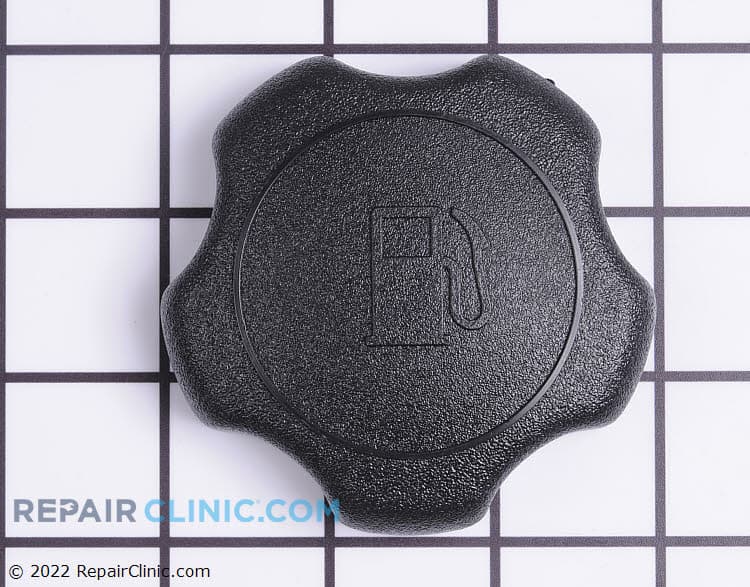
Fuel cap
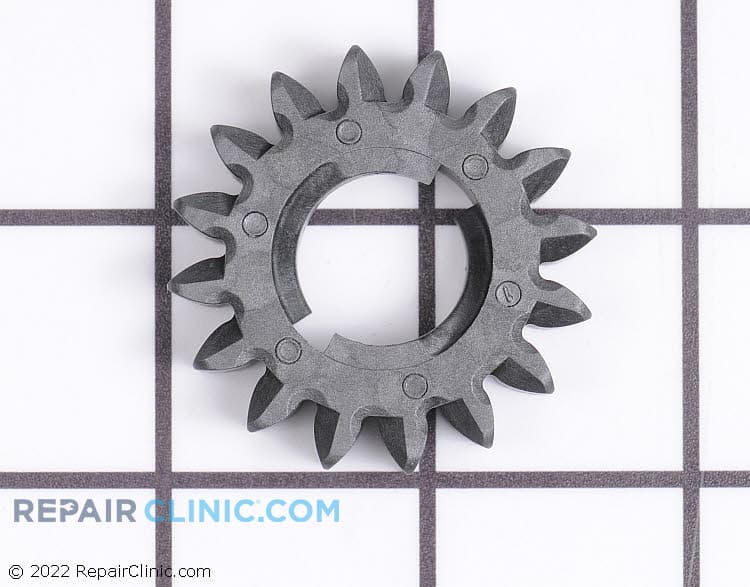
Briggs & Stratton starter gear (also called a pinion gear), 16-tooth, plastic. The starter gear engages the flyhweel to start the engine. If the teeth on the starter gear are worn out, the engine may not start.
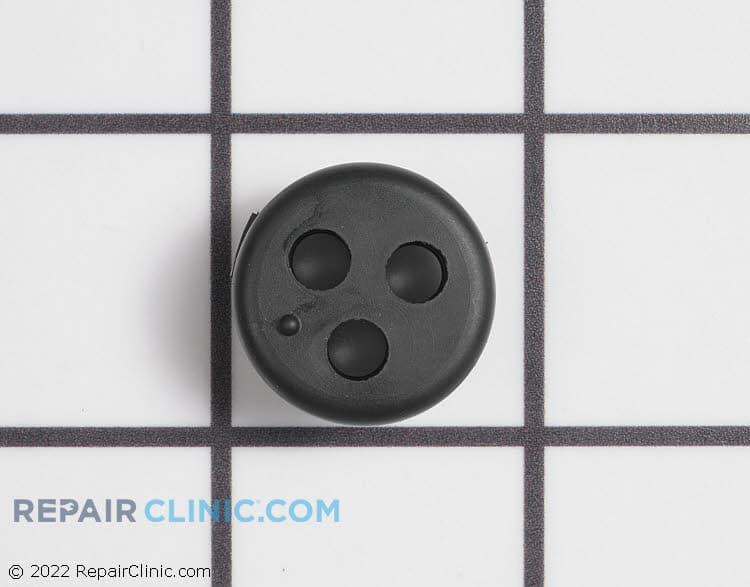
Fuel tank grommet. Secures the fuel supply, return and vent lines to the fuel tank.

Drum, starter
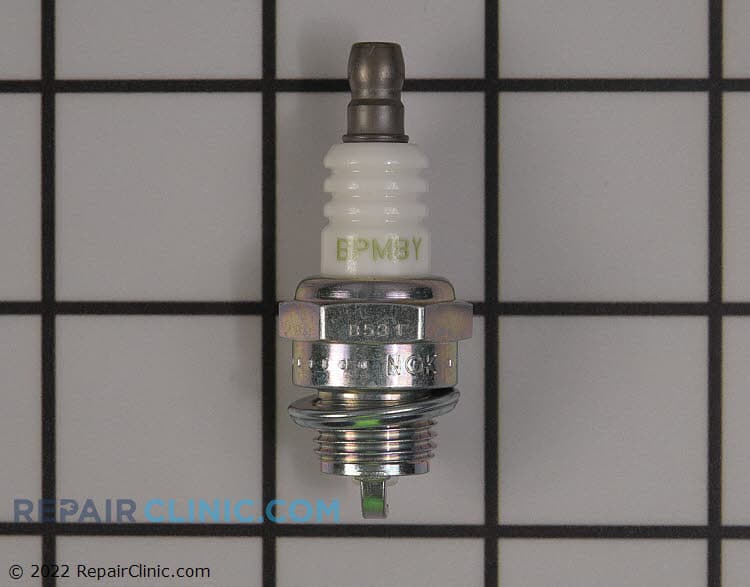
NGK Spark Plug (BPM8Y). The spark plug ignites the fuel and air mixture in the engine's cylinder to power the engine. If the spark plug is has fouled (if the tip of the spark plug is burnt or damaged), the engine may not start or may run rough.
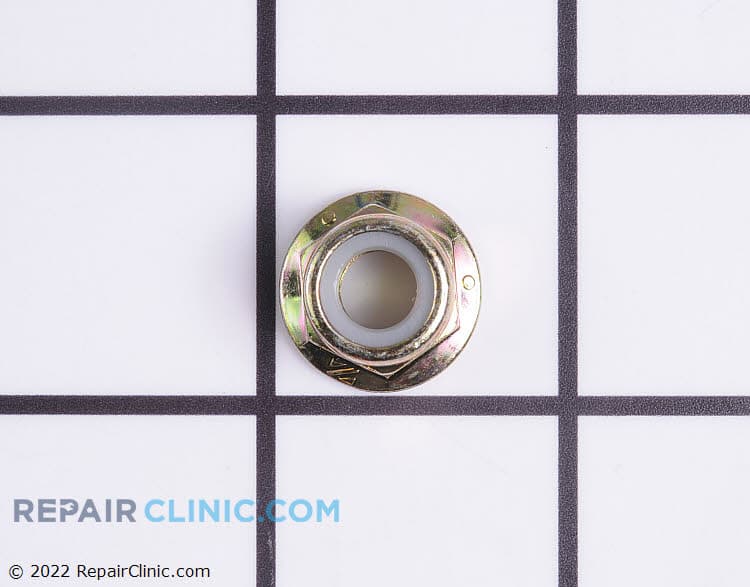
MTD flange lock nut, 5/16-18.
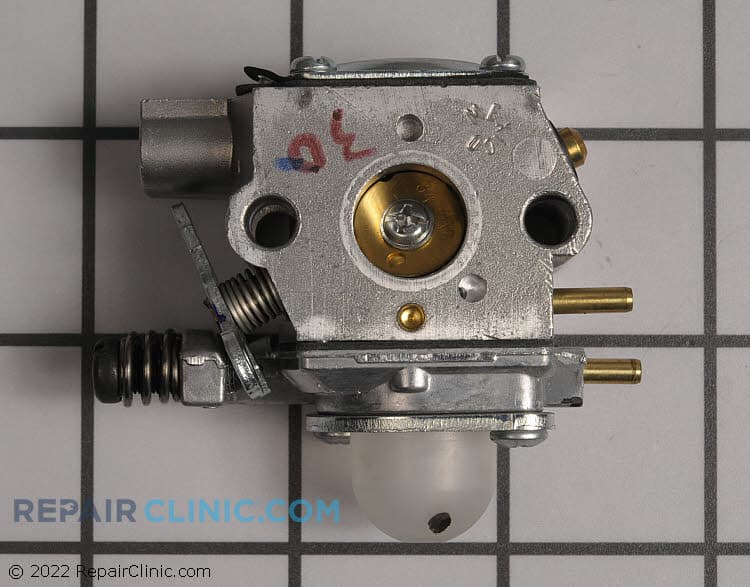
Two cycle engine carburetor. If the engine runs rough, the carburetor may be restricted. The carburetor can often be cleaned or rebuilt, but sometimes it may need to be replaced.
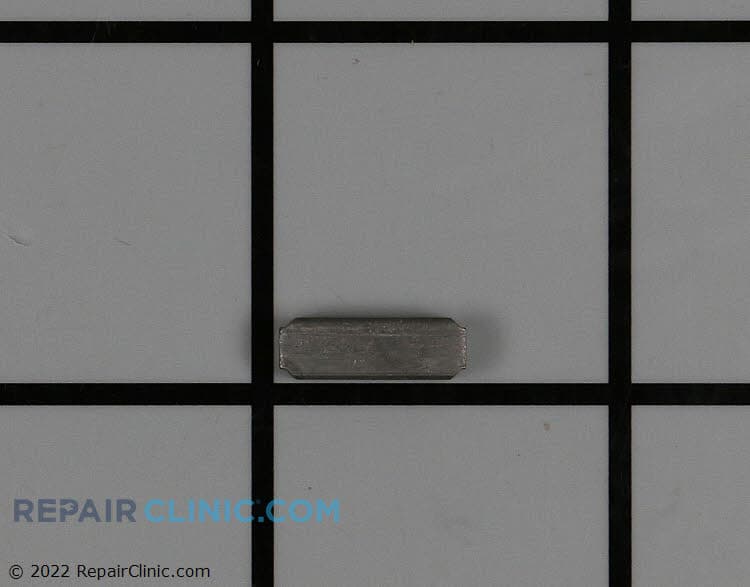
Briggs & Stratton flywheel key. The flywheel key aligns the flywheel in the correct position on the crankshaft. If the engine stops suddenly due to hitting a hard object, the flywheel key shears in half to prevent damage to the engine. If the flywheel key is broken, the engine won't start.


Common Leaf Blower Repairs & Parts
Gas leaf blowers fail in predictable ways, and most repairs come down to a handful of parts. The carburetor is the #1 failure — ethanol-damaged fuel clogs the jets and needle valve, leaving you with a blower that won't start or runs rough. Recoil starters jam or snap, fuel lines crack from age, and spark plugs foul. Air filters clog from dust. On the business end, impeller blades crack or break, killing airflow. The good news: these are all straightforward fixes with OEM parts from Repair Clinic.
Enter your leaf blower model number to find the exact parts you need. Whether you are repairing a compatible model, we carry OEM carburetors, starters, fuel system parts, and impeller assemblies in stock.
- Carburetor won't start or runs rough: Ethanol damage or stale fuel clogs jets; rebuild kit or full replacement
- Pull cord stuck or won't recoil: Recoil starter assembly failure; springs and pawls wear out
- Weak or no airflow: Cracked or broken impeller blade; loss of thrust
- Fuel won't flow: Cracked fuel line or clogged fuel filter; cracked primer bulb
- Engine won't spark: Fouled or gapped spark plug; maintenance item
Popular Leaf Blower Models
Related Leaf Blower Parts
- Leaf Blower Miscellaneous Parts
- Leaf Blower Fastener Parts
- Leaf Blower Gasket & Seal Parts
- Leaf Blower Cap, Lid & Cover Parts
- Leaf Blower Hose, Tube & Fitting Parts
- Leaf Blower Engine Parts
- Leaf Blower Carburetor Parts
- Leaf Blower Manuals, Care Guides & Literature
- Leaf Blower Bracket & Flange Parts
- Leaf Blower Spring Parts
- Leaf Blower Starter Parts
- Leaf Blower Filter Parts
- Leaf Blower Handle Parts
- Leaf Blower Bearing Parts
- Leaf Blower Wire, Receptacle & Wire Connector Parts
- Leaf Blower Muffler Parts
- Leaf Blower Control Cable Parts
- Leaf Blower Axle, Roller, Shaft, Wheel Parts
- Leaf Blower Valve & Float Parts
- Leaf Blower Panel Parts
- Leaf Blower Knob, Dial & Button Parts
- Leaf Blower Motor Parts
- Leaf Blower Blower Wheel & Fan Blade Parts
- Leaf Blower Insulation Parts
- Leaf Blower Switch Parts
- Leaf Blower Ignition Controls Parts
- Leaf Blower Transmission, Brake & Clutch Parts
- Leaf Blower Latch Parts
- Leaf Blower Tool
- Leaf Blower Pulley Parts
- Leaf Blower Spark Plug Parts
- Leaf Blower Suspension & Shock Absorption Parts
- Leaf Blower Tank & Container Parts
- Leaf Blower Bag Parts
- Leaf Blower Belt Parts
- Leaf Blower Trim Parts
- Leaf Blower Alternator, Battery & Charger Parts
- Leaf Blower Pump Parts
- Leaf Blower Deflector & Chute Parts
- Leaf Blower Dipstick Parts
- Leaf Blower Grille & Kickplate Parts
- Leaf Blower Lubricant
- Leaf Blower Oil Plug Parts
- Leaf Blower Power Cord Parts
- Leaf Blower Tune-Up Maintenance Kit
- Leaf Blower Auger Parts
- Leaf Blower Duct & Venting Parts
- Leaf Blower Safety Equipment
- Leaf Blower Tire & Rim Parts
- Leaf Blower Shelf & Shelf Support Parts
- Leaf Blower Skid & Shoe Parts
- Leaf Blower Adhesive
- Leaf Blower Blade Parts
- Leaf Blower Chassis Parts
- Leaf Blower Circuit Board & Timer Parts
- Leaf Blower Compressor & Sealed System Parts
- Leaf Blower Door Parts
- Leaf Blower Pedal Parts
- Leaf Blower Power Tools Parts
- Leaf Blower Shear Pin Parts
- Leaf Blower Spindle Parts
- Leaf Blower Steering Parts
Leaf Blower Parts FAQ
Why won't my leaf blower start?
The carburetor is almost always the culprit. Ethanol in modern gasoline gums up the carburetor's tiny jets and needle valve, preventing fuel from reaching the engine. Old fuel left sitting in the tank hardens and clogs everything. A carburetor rebuild kit (gasket, needle, and jet set) is often the first fix; if that doesn't work, a full OEM carburetor replacement for your model is the answer. Always use fresh fuel and consider a fuel stabilizer for off-season storage.
How do I find my leaf blower model number?
The model number is printed on a sticker or stamped into the plastic housing, usually near the air filter or on the back of the engine. It looks like "BR600" () or "BG55" () or a longer alphanumeric like "WG546" (). Write it down — you'll need it to order the correct carburetor, impeller, or fuel line for your blower. Every brand codes differently, so the model number is your key to exact-fit parts.
What's the difference between a gas leaf blower carburetor and a one?
Gas leaf blower carburetors are engine-specific. A BR600 carburetor won't fit a 125B, and carburetors rarely seal correctly or deliver the right fuel-to-air ratio. Always use the OEM carburetor for your model number. We carry Zama, Walbro, and other OEM carb suppliers — enter your model to get the exact match.
How often should I replace the spark plug?
At least once a year before the spring blowing season, or every 50 to 100 hours of use. A fouled plug (covered in carbon) won't spark, and a plug gapped too wide won't fire. Keep the correct OEM spark plug type in your toolbox. Most common types are Champion RJ19LM or NGK BR2LM — but verify your manual or model number.


Shop Leaf Blower Parts Replacement Online
Ensure your leaf blower stays in peak condition with genuine replacement parts. Finding the right part is reliable using the model or part number lookup on our site. Order online with confidence, knowing that parts ship the same day for your convenience. Whether you need ignition parts, carburetor parts, or spark plugs, we make it easy to find and order leaf blower parts online. With fast shipping and expert repair resources, your leaf blower will be back in action in no time. For further assistance, visit our leaf blower repair help page for detailed repair guides and solutions. Browse our selection of leaf blower parts to ensure a proper fit.
Filter Leaf Blower Parts by Your Model Number
The fastest way to the right leaf blower parts is your model number, usually printed on a label near the air filter or on the back of the engine housing. Check the blower's plastic housing and look for a model code, not the serial number. Once you have it, enter it in the search bar to narrow the catalog to every part that fits your specific blower model. This works across engine, fuel, ignition, housing, and other associated parts, so you do not have to guess which listing applies. A model search gives you a faster, more accurate match and helps avoid ordering parts for the wrong unit.

Online Repair Library for Leaf Blower
Repair Clinic's online repair library gives you the tools to diagnose and fix your Leaf Blower without a service call. Common-symptom articles cover the most likely causes, part testing videos confirm the failed component, and step-by-step written guides walk you through the installation. Use the model number lookup to confirm the exact OEM part, and exploded-view diagrams and wiring illustrations support the more involved jobs.
Related Articles: Leaf Blower Repair

Mastering Leaf Blower Techniques: How To Use A Leaf Blower
Find essential techniques for safe and efficient yard cleanup using a leaf blower from choosing the right model and adjusting the nozzle to mastering sweeping motions for leaf and debris removal.
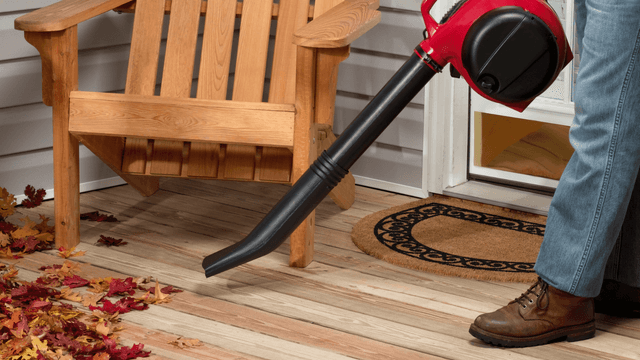
Gas Leaf Blower Running Rough? Here Are 5 Reasons Why
Identify five common causes of a rough running gas leaf blower such as a clogged carburetor fuel or air filter worn spark plug or blocked spark arrestor and how to address each one.

Gas-Powered Leaf Blower Starting Then Stalling? 5 Likely Causes
Uncover five likely causes that make a gas-powered leaf blower start and then stall—such as a clogged spark arrestor, restricted carburetor, dirty filters, or obstructed fuel cap—and how to resolve each one.




Family-owned and operated since 1912, Burke America Parts Group is the longest-running genuine appliance, HVAC, and outdoor power equipment parts solution in North America. At Repair Clinic, we're proud to be an international brand trusted by the pros as well as the DIY community.
About Repair Clinic